

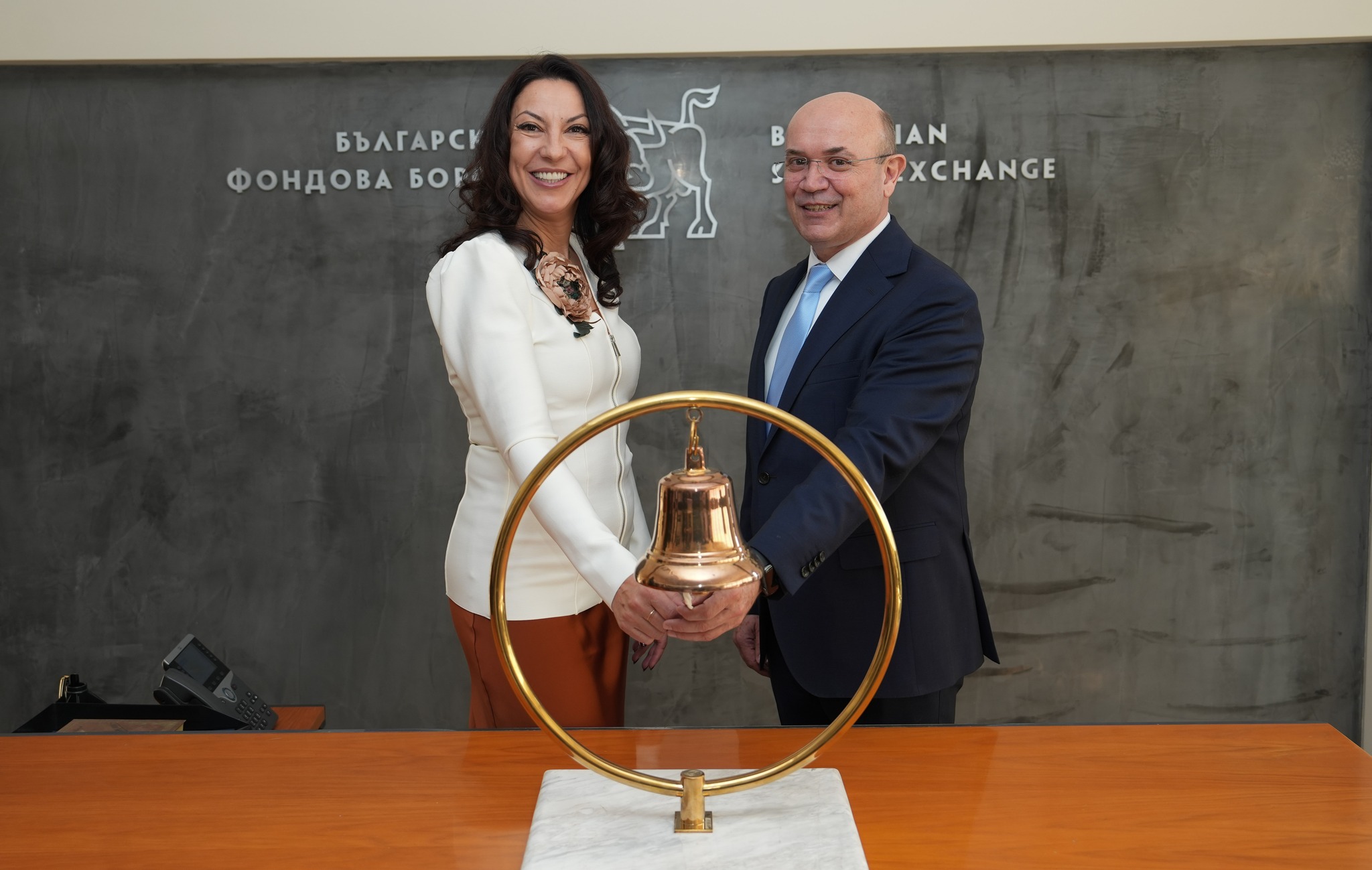
Denitsa Velichkova, Deputy Chair of the FSC, participated in the “Ring the Bell for Gender Equality” ceremony at the BSE

Denitsa Velichkova, Deputy Chair of the Financial Supervision Commission (FSC) in charge of the Investment Supervision Division, participated in the twelfth “Ring the Bell for Gender Equality” ceremony, organized with the support of the United Nations Global Compact and UN Women under the auspices of the United Nations. This year’s campaign message was “Right. Equality. Empowerment. For all women and girls.” The event took place at the premises of the Bulgarian Stock Exchange.

The ceremony was opened by the Chief Executive Officer of the Bulgarian Stock Exchange, Assoc. Prof. Dr. Manyu Moravenov, who presented data from the “Women on Boards” initiative regarding the participation of women in the management bodies of listed companies. The statistics presented show that the number of women CEOs in public companies has increased by 10% over the past year.

Denitsa Velichkova noted that the financial sector is often an example of the strong presence of women both as professionals and as leaders; however, sustainable success is achieved when there is balance and partnership between women and men in decision-making processes and in building sustainable organizations.

The ceremony was also attended by Diana Yordanova, Diana Yordanova, Deputy Chair of the Financial Supervision Commission, Head of the Social Insurance Supervision Division..

Within the framework of the event, the special guest speaker was Krasimira Hadzhiivanova, founder of the platform “Maiko Mila” and the social enterprise “Ole Male”, who delivered a lecture titled “Social Entrepreneurship as a Form of Leadership.” She shared examples of how social enterprises create opportunities for financial independence and leadership for women in Bulgaria.

The ceremony concluded with the symbolic ringing of the stock exchange bell, marking the participants’ support for equal opportunities and for building a more open, fair, and sustainable business environment.
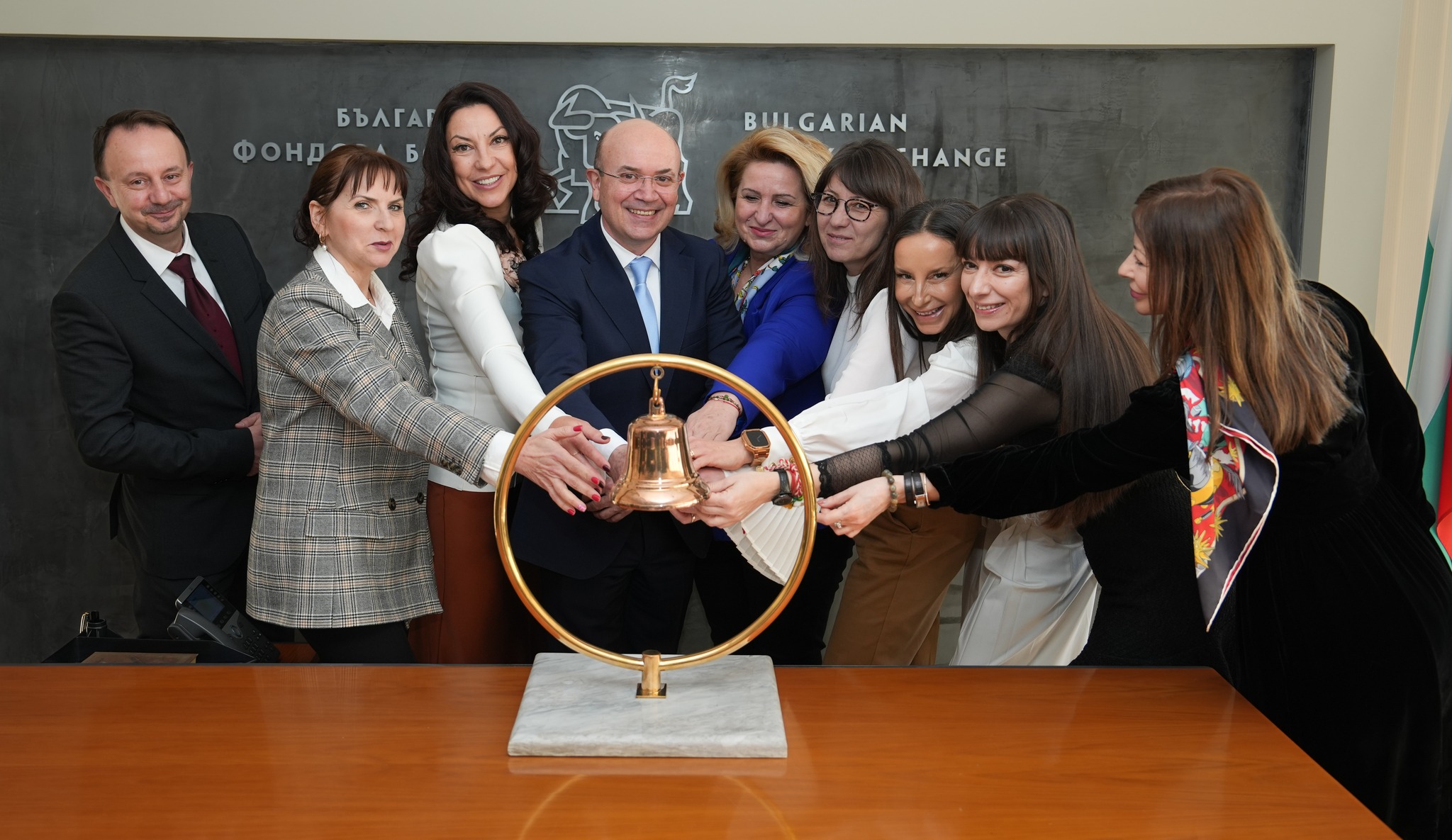
D.Velickova_RingtheBell

The Financial Supervision Commission has sent notification about its consent for the portfolio transfer from “Allianz Risk Transfer AG” to “Allianz Global Corporate & Specialty SE”

The Financial Supervision Commission (FSC) has been notified by the competent authority of Liechtenstein of the merger from the insurance undertaking “Allianz Risk Transfer AG” to “Allianz Global Corporate & Specialty SE”, including insurance contracts on which Bulgaria is a Member State where the risk is located. After reviewing the portfolio documents, the FSC decided to send a letter to the national competent authority of Liechtenstein on granting consent of the merger of “Allianz Risk Transfer AG” to “Allianz Global Corporate & Specialty SE”

FSC expects applications for licensing of Crypto Companies by 16 February

The Financial Supervision Commission (FSC) expects companies registered as Virtual Asset Service Providers (VASPs) that wish to obtain authorisation under the Markets in Crypto-Assets Regulation (MiCA) to submit their applications by 16 February 2026. The transitional period outlined in § 3(1) of the Transitional and Final Provisions of the Crypto-Asset Markets Act will conclude on 1 July 2026. The review of submitted documentation is estimated to take between four to five months. Any suspension of the statutory deadlines, or their resumption at the request of, or as a result of actions by, the applicant will substantially prolong the procedure and will make it impossible for the FSC to issue a decision before 1 July 2026.

This is stated in a letter sent by the FSC to the companies entered in the crypto-assets register, so called VASPs.

To date, the FSC has held more than 30 meetings with companies that have expressed an intention to apply for authorisation. The Commission’s experts have provided clarifications on the regulatory requirements and expectations regarding the preparation of the documentation to all interested parties.

After 16 February 2026, preliminary meetings with new companies will be discontinued, and the Commission’s efforts will be focused on the review of applications already submitted. Meetings will be held only exceptionally with companies that have already undergone a preliminary assessment, and solely for the purpose of clarifying additional issues.

Companies that plan to discontinue their crypto-asset activities by 1 July 2026 will be required to submit to the FSC, by 1 March 2026 at the latest, a plan for the orderly and transparent wind-down of their activities, including the arrangements for settling relations with clients. Entities that do not carry out any activity are able to apply for deregistration from the register under § 5(3) of the Transitional and Final Provisions of the Crypto-Asset Markets Act, in accordance with the procedure laid down in § 6 of the same Act.

Additional information, including a “Frequently Asked Questions on Crypto-Assets” section is available in the “Crypto-assets” section of the FSC’s website.

FSC Warns of Crypto Company Hijacking

The Financial Supervision Commission (FSC) warns of a dangerous practice in the crypto sector about so-called “crypto company hijacking.” These cases involve the registration of company managers in the Commercial Register without the knowledge of the actual owners, through the use of forged documents.

This is stated by Desislava Laskova, Director of the “Regulatory Regimes of Investment Activity – Investment Intermediaries and Crypto-Asset Service Providers” Directorate at the FSC, in an interview with Darik Radio. According to her, such fraud schemes pose serious risks both to the licensing of the companies concerned and to unlawful actions carried out in their name, including the taking out of loans.

The interview is conducted at a moment when the period for CASPs applications is ending and is established a significant difference between the regulated financial sector and parts of the crypto business, which until now have operated in a largely unregulated environment. At the same time, we also see growing commitment on the part of companies to bring their activities into line with the new rules, which is an important step towards building a more mature, transparent and sustainable crypto-asset market.

Against this background, the FSC is already applying the European MiCA Regulation, which introduces a single legal framework for crypto-assets in the European Union. A transitional period applies until 1 July 2026, after which providers operating without a license will no longer be allowed to operate on the market.

The FSC is the competent authority for the supervision of crypto-assets in Bulgaria, with the exception of electronic money tokens, which fall under the supervision of the Bulgarian National Bank.

Out of eight license applications submitted:

  • one company has already been licensed (investment intermediary);
  • three applications are currently under review;
  • four companies have been refused at the completeness check stage due to the absence of a substantial portion of the required documentation and communication issues.

“Through a circular letter, we invited companies to meetings, which is an established communication practice of the Financial Supervision Commission. Our aim is to maintain an open dialogue with the sector and to provide concrete guidance to companies on how to prepare their licensing documentation so that it fully complies with the requirements of the MiCA Regulation and the national regulatory framework,” Laskova notes.

The FSC reminds market participants that the licensing procedure takes between 4 and 6 months. Therefore, companies wishing to continue operating legally after the end of the transitional period should submit their documents no later than 16 February.

The full interview is available here.

More information on the crypto-asset market and the regulatory activities of the Financial Supervision Commission can be found in the dedicated crypto-assets section on the FSC’s official website:
https://www.fsc.bg/kriptoaktivi/

FSC Chair Takes Part in EU Talks on Key Regulatory Priorities in Copenhagen

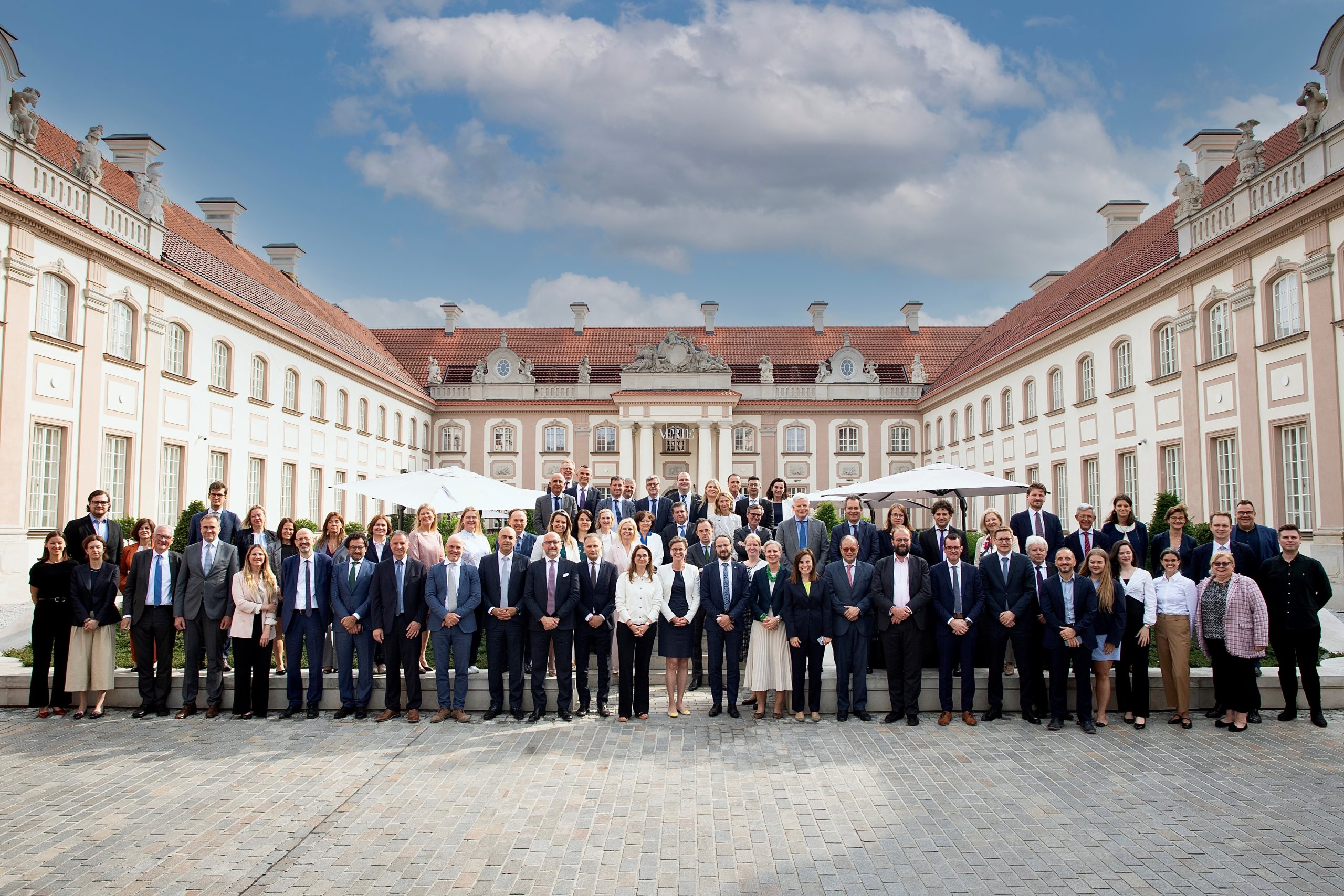
The Chair of the Financial Supervision Commission (FSC), Mr. Vasil Golemanski, took part in a regular meeting of the Board of Supervisors of the European Securities and Markets Authority (ESMA), held in Copenhagen.

ESMA is an independent authority of the European Union responsible for enhancing the stability and transparency of Europe’s financial markets. Its core priorities include protecting investors, safeguarding their rights, and ensuring access to reliable and innovative financial services. The Board of Supervisors forms the core of ESMA’s governance structure, setting its strategic direction and coordinating the joint work of national supervisory authorities across the EU.

During the meeting, participants discussed key priorities related to capital markets, digital finance, sustainable investments, and the performance of supervisory functions in an environment of heightened global risks. Members reaffirmed their commitment to closer cooperation and stronger coordination of supervisory practices within the single European market.

“The Financial Supervision Commission will continue to work actively within ESMA’s structures to foster a transparent, efficient, and secure financial sector in the interest of investors, society, and businesses alike. We value these discussions and exchange of experience, which allow us to represent and protect Bulgaria’s interests among our European partners”, said Mr. Golemanski.

group photo
Group photo

Bulgaria Included for the First Time in the OECD Corporate Governance Factbook 2025

Bulgaria has been included for the first time in the 2025 edition of the OECD Corporate Governance Factbook – the flagship biennial publication of the Organisation for Economic Co-operation and Development (OECD), which presents up-to-date data and policy developments in the field of corporate governance across 52 jurisdictions, including all OECD and G20 economies. Alongside Bulgaria, Croatia and Romania are also featured in the analysis for the first time.

The Factbook tracks how corporate governance policies and regulatory frameworks are evolving in the context of dynamic capital market developments, digitalisation, and sustainable finance. It serves as an international benchmarking tool for regulators, reflecting the implementation of the OECD/G20 Principles of Corporate Governance.

Key highlights from the 2025 edition:
➡️ Institutional investors now own 47% of global listed equity, leading to wider adoption of stewardship codes.
➡️ 73% of jurisdictions publish national reports on the implementation of corporate governance codes.
➡️ Virtual general meetings are permitted in 85%, and hybrid meetings in 94% of jurisdictions.
➡️ Women hold 29% of board seats, compared to 22% five years ago.
➡️ 90% of jurisdictions require corporate sustainability-related disclosure, and 60% require independent assurance (audit) of this information.

Bulgaria’s inclusion in the OECD Corporate Governance Factbook 2025 represents an acknowledgment of the efforts made by national institutions and the Financial Supervision Commission (FSC) to strengthen the corporate governance framework and align it with leading international standards.

The Factbook is complemented by Country Notes, which aim to provide an easily accessible overview of each jurisdiction. Along with the summary of recent developments, it provides Bulgaria’s corporate governance framework and related information benchmarked against 51 other jurisdictions covered by the Factbook.

As the national regulator aiming at full membership in the OECD Corporate Governance Committee, the Financial Supervision Commission plays an active role in exchanging data, best practices, and expertise related to corporate governance, capital markets, and sustainable finance. Through this participation, FSC supports the integration of Bulgaria’s regulatory framework into the global governance landscape and promotes transparency, accountability, and trust in the capital market.

The full report and Country Notes are available on the OECD website:

OECD Corporate Governance Factbook 2025

OECD Corporate Governance Factbook 2025: Bulgaria (Country Note in English)

OECD Corporate Governance Factbook 2025: Bulgaria (Country Note in Bulgarian)

For a first time the Bulgarian translation of the G20/OECD Principles of Corporate Governance 2023 were published on the OECD website, available at the following link:  G20/OECD Principles for Corporate Governance BG

FSC and FID – SANS carried out jointly a training regarding the measures against ML/FT and the proliferation of weapons for mass destruction.

On 1st October, 2025 the Financial Supervision Commission and the Financial Intelligence Directorate of State Agency for National Security conducted a training focused on topics related to the implementation of the AML/CFT/CPF measures provided for in the Law on Measures Against Money Laundering (LMML), the Law on Measures Against the Financing of Terrorism and the Proliferation of Weapons for Mass Destruction and the acts on their implementation, organized for representatives of the investment intermediaries, management companies and alternative investment fund managers. The event was in hybrid form and was attended by more than 100 representatives of the obliged entities under Art. 4, items 8 – 10 of the LMML.

In the course of the meeting were discussed the following topics:

  • goAML registration;
  • Changes in the AML/CFT/CPF legislation;
  • Implementation of the AML/CFT measures in practice.

The conducted training aimed to deepen the understanding of the representatives of the investment intermediaries, management companies and alternative investment fund managers regarding the requirements of the preventive legislation and their essential role in the process of maintaining the stability of the financial sector and in assisting to the competent state authorities in preventing and detecting money laundering and terrorist financing and proliferation of weapons for mass destruction activities.

The Financial Supervision Commission has sent notification about its consent for the portfolio transfer from “GENERALI ESPAÑA, SOCIEDAD ANÓNIMA DE SEGUROS Y REASEGUROS” to “GENERALI SEGUROS Y REASEGUROS, S.A.”

The Financial Supervision Commission (FSC) has been notified by the competent authority of Spain of the merger from the insurance undertaking “GENERALI ESPAÑA, SOCIEDAD ANÓNIMA DE SEGUROS Y REASEGUROS” to “GENERALI SEGUROS Y REASEGUROS, S.A.”, including insurance contracts on which Bulgaria is a Member State where the risk is located. After reviewing the portfolio documents, the FSC decided to send a letter to the national competent authority of Spain on granting consent of the merger of “GENERALI ESPAÑA, SOCIEDAD ANÓNIMA DE SEGUROS Y REASEGUROS” to “GENERALI SEGUROS Y REASEGUROS, S.A.”

The Financial Supervision Commission has sent notification about its consent for the portfolio transfer from “MSIG Insurance Europe AG” to “MS Amlin Insurance SE”

The Financial Supervision Commission (FSC) has been notified by the competent authority of Germany of the merger from the insurance undertaking “MSIG Insurance Europe AG” to “MS Amlin Insurance SE”, including insurance contracts on which Bulgaria is a Member State where the risk is located. After reviewing the portfolio documents, the FSC decided to send a letter to the national competent authority of Germany on granting consent of the merger of “MSIG Insurance Europe AG” to “MS Amlin Insurance SE”.